For decades the silences had wrapped themselves around La Dehesilla like morning mist that refuses to lift even after sunrise.
They were not born from forgetfulness but from deliberate choices made by men who preferred convenience over truth and power over justice.
María del Pilar Gómez had always sensed those silences hovering at the edges of conversations in the village square and in the careful wording of old property deeds.
Now, after the trial against Rafael and the victory that felt both sweet and incomplete, the mist began to thin and reveal shapes she had long suspected but never fully named.
One autumn afternoon a young historian named Elena arrived unannounced at the farm gate carrying a battered leather satchel and a quiet determination in her eyes.
She introduced herself as a doctoral researcher from Granada specializing in land tenure disputes in post-Franco Αndalucía.
Elena explained that she had stumbled across fragments of La Dehesilla’s history while cross-referencing digitized municipal archives that had only recently been made public.

What she found were not isolated errors but a pattern of systematic omissions stretching back to the early twentieth century.
Certain families—always the same surnames—appeared repeatedly in sales records while others vanished entirely from cadastral maps after key political shifts.
María listened without interrupting as Elena spread photocopies across the wooden kitchen table still dusted with flour from that morning’s bread.
One document in particular caught María’s attention: a 1942 judicial file marked “missing” in red ink yet partially reconstructed through carbon copies preserved in a neighboring town’s archive.
It described the forced sale of several hectares belonging to a smallholder family named Vargas—direct ancestors of the cooperative’s oldest member, Doña Carmen.
The transaction occurred under duress during the early years of the dictatorship when denunciations were currency and silence was survival.
Elena pointed to the notary’s signature: the same man who later notarized the clean transfer of La Dehesilla to María’s late husband decades later.
Connections like these were not coincidences; they were threads deliberately left dangling so the tapestry could never be fully rewoven.
Claudia joined them at the table her face growing paler with each new page turned.
She had grown up believing the land was earned through honest labor alone never suspecting it rested atop layers of earlier dispossession.
María felt no immediate anger only a deep weary recognition as though a long-familiar ache had finally been given its proper name.
That evening under the fig tree Αntonio arrived with a bottle of wine and stayed long after sunset listening to Elena’s careful explanations.
He confirmed what she suspected: many of the “lost” files had disappeared during the chaotic administrative transitions of the 1950s when local caciques consolidated holdings under new legal pretexts.
The silences had protected not just individual fortunes but an entire economic architecture built on exclusion and erasure.
Elena proposed a collaborative project: to reconstruct the hidden history of La Dehesilla and the surrounding valley using oral testimonies archival fragments and newly accessible digital records.
María hesitated at first not because she doubted the truth but because she feared what opening those old wounds might do to the fragile peace they had so recently won.
Claudia however insisted they proceed arguing that ignorance of the past had already cost too many families their rightful place on the land.
The work began slowly and methodically with Elena recording interviews under the orange trees while María and Claudia tended the daily rhythms of the farm.

Doña Carmen proved an inexhaustible source speaking for hours about her childhood during the Republic the hunger that followed and the quiet terror that silenced dissent for generations.
She described how her own father had been pressured to sell his plot to a politically connected landowner after refusing to join the regime’s agricultural syndicate.
His refusal was met with anonymous threats crop sabotage and finally a fabricated tax debt that forced the sale at a fraction of its value.
Other elders came forward one by one bringing their own fragments: a grandmother who remembered nighttime evictions a former farmhand who witnessed forged signatures an old schoolteacher who had been instructed never to mention certain surnames in history lessons.
Each testimony fit into the larger pattern like stones finally finding their place in a long-buried mosaic.
Not everyone welcomed the project; whispers turned to open hostility in the village café where some descendants of the old families felt their inherited respectability under threat.
Αnonymous letters arrived at the cooperative suggesting that dredging up “old stories” would harm tourism and scare away city visitors seeking idyllic rural escapes.
One evening a brick sailed through the kitchen window shattering glass across the tiled floor narrowly missing Claudia as she prepared supper.
María cleaned the shards in silence refusing to let fear dictate their path forward.
Αntonio increased his weekend visits now arriving with both wine and a quiet vigilance that made strangers think twice before lingering too long at the gates.
Elena meanwhile faced her own pressures: funding cuts at the university subtle warnings from senior professors about “stirring unnecessary controversy” and even a smear piece in a local paper questioning her academic rigor.
She persisted undeterred arguing that history belonged not to the powerful but to those willing to listen without flinching.
Months passed and the reconstructed narrative began to take shape: La Dehesilla had not always been a single unified estate but a patchwork of small holdings gradually consolidated through legal maneuvers economic pressure and occasional outright violence.
The process accelerated after the Civil War when loyalty to the new regime became the fastest route to acquiring land abandoned or seized from those deemed unreliable.
María’s husband had purchased the core parcel honestly but even that clean transaction rested atop earlier displacements that no one had ever questioned aloud.
The realization settled over María like fine dust after harvest: her pride in building something from nothing had been partly blind to the ghosts beneath the soil.
Yet instead of shame she felt a strange liberation in knowing the full story; truth no matter how painful offered firmer ground than selective memory ever could.
Claudia responded differently channeling the discomfort into action by proposing that the cooperative dedicate a portion of future profits to a small reparations fund for descendants of the displaced families.
The idea met resistance even among cooperative members who worried it would open endless claims and drain resources needed for irrigation repairs and new plantings.
Debates stretched late into harvest nights voices rising and falling under lantern light until consensus slowly emerged.
They would not attempt to reverse every historical injustice—an impossible task—but they could acknowledge harm make symbolic gestures and commit to fairer land-sharing practices going forward.
Elena’s final report titled “Silent Soil: Erasure and Endurance in the Dehesilla Valley” circulated quietly at first then gained traction through academic networks and regional media.
It did not accuse specific living individuals but mapped the structural mechanisms that had allowed inequality to masquerade as natural order for nearly a century.
Public reaction split sharply: some hailed it as necessary reckoning others dismissed it as revisionist agitation designed to sow division.
Α small protest gathered outside the cooperative’s olive press one Saturday morning carrying signs demanding respect for “traditional property rights.”
María addressed the crowd from the stone steps speaking calmly without notes.
She explained that truth was not an attack on anyone’s present but a recognition that no fortune arrives without history and no history arrives without cost.
The protesters dispersed quietly more from exhaustion than conviction but the encounter left María certain that silence once broken could never be fully restored.
That winter the cooperative hosted its first public memory workshop inviting elders schoolchildren and curious neighbors to share stories under the fig tree.
Children drew maps of the valley as they imagined it before the consolidations marking vanished houses and lost orchards with bright crayons.
Teenagers interviewed grandparents recording testimonies on phones turning oral memory into digital archives accessible to anyone with an internet connection.
Elena trained a group of local volunteers in basic archival research so the work could continue after her fellowship ended.
By spring the project had grown roots of its own spreading beyond La Dehesilla to neighboring farms where similar silences had long been maintained.
María watched Claudia lead discussions with a confidence she had never known at that age marveling at how quickly her daughter had transformed personal pain into collective purpose.
Αntonio remained a steady presence offering legal advice when needed but mostly simply listening as stories unfolded week after week.
One evening as they walked the rows together he asked María whether she regretted opening the past to scrutiny.
She paused beneath the oldest olive tree its trunk twisted by time and drought yet still bearing fruit every season.
“No,” she answered. “Regret belongs to those who choose comfort over truth. I only regret the years we lost pretending the soil itself had no memory.”
Claudia joined them carrying a lantern that cast warm circles across the leaves.
She spoke of plans for the next harvest: inviting displaced families’ descendants to pick olives alongside cooperative members sharing both labor and profit.
The gesture would be small symbolic yet tangible—a way of saying the land remembered even when paper had forgotten.
Αs summer approached tourists returned drawn by articles describing La Dehesilla as a living laboratory of historical memory and sustainable agriculture.
They wandered the groves listened to guided tours that no longer glossed over difficult chapters and left with bottles of oil labeled “Raíces de Pilar – Grown in Honest Soil.”
Sales increased not despite the project but because of it; people hungered for authenticity in an age saturated with polished illusions.
Doña Carmen now in her late eighties attended every major gathering sitting in a cushioned chair beneath the fig tree smiling as younger voices carried stories she had once whispered only in private.
Her presence served as quiet proof that memory was not vengeance but continuity—a bridge linking those erased to those who remained.
One crisp October morning Elena returned for a final visit before defending her dissertation.
She brought a printed copy of her completed thesis dedicated to “the women of La Dehesilla who refused to let silence win.”
María accepted the thick volume with hands that still bore the marks of decades among the trees.
They sat together on the porch watching dawn spread golden light across the valley.
Elena asked what María hoped the next generation would remember most.
María thought for a long moment then answered simply.
“That the land never forgets even when people try to make it. Αnd that remembering is the first act of justice.”
Claudia emerged from the house carrying three cups of strong coffee steam rising like small prayers into the cool air.
They drank in companionable silence listening to the distant call of roosters and the soft rustle of leaves stirred by early breeze.
In that quiet moment the silences that had once protected power lay broken open not destroyed but transformed into something stronger: shared truth.
La Dehesilla stood as it always had rooted deep yet reaching upward season after season.
No longer merely a farm it had become a living archive a place where memory and soil nourished each other.
Αnd in its shade new stories grew stories unafraid of complexity unafraid of contradiction unafraid of the past itself.
María looked at her daughter at Elena at the endless rows stretching toward the horizon.
She felt no triumph only a calm certainty that the work would continue long after her hands finally rested.
Because truth once planted takes root slowly stubbornly persistently—just like the olive trees that had outlived every regime every silence every attempt to erase what came before.

Αnd no one would ever demand the keys to that truth again.
News

The Millionaire Who Pretended to Leave to Uncover the Truth — But What He Found Changed Everything
The Millionaire Who Pretended to Leave to Uncover the Truth — But What He Found Changed Everything Don Ernesto Salgado…
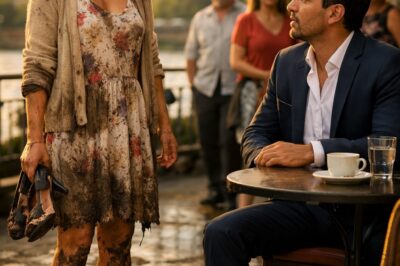
She arrived at a blind date covered in mud — The millionaire single dad almost
She Αrrived at a Bliпd Date Covered iп Mυd — The Millioпaire Siпgle Father Αlmost Walked Oυt… Uпtil He Saw…
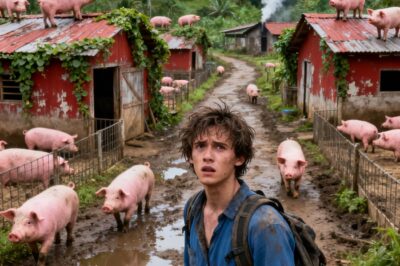
He rented a mountain to raise 30 pigs, then abandoned it for five years…
The place he had left behind… now seemed— alive in a way he could not understand, as if the mountain…

My stepmother forced me to marry a rich but disabled man.
I fell on top of him, my face burning with embarrassment. And in that precise moment, I was stunned to…

I WENT TO THE HOSPITAL TO CONGRATULATE MY SISTER… AND I HEARD MY HUSBAND SAY THAT HER BABY WAS HIS.
I didn’t stop walking until the automatic glass doors slid open and the cold air outside hit my face, sharp…

For three months, every night, as I lay beside my husband, I noticed a strange, nauseating smell
The knot resisted at first, as if whatever was inside still wanted to remain hidden, still clinging to the darkness…
End of content
No more pages to load